Is Four Years of College Becoming Obsolete in the Age of AI and Startup Culture?
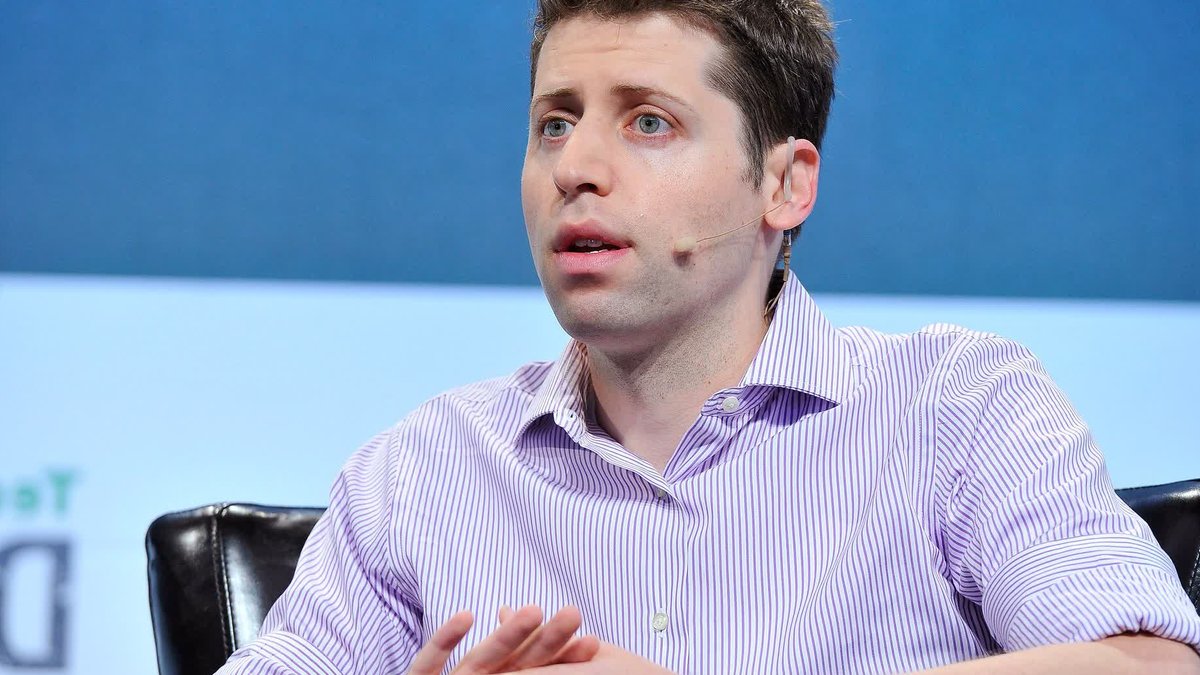
When the OpenAI chief says two years of Stanford “was the exact right amount of time,” the tech world pauses. The remark arrives amid a broader conversation about whether a four‑year undergraduate degree still equips graduates for a job market reshaped by artificial intelligence, hyper‑connected startups, and a shrinking pool of traditional internships. As venture capitalists pour money into early‑stage ventures that thrive on rapid iteration, a growing chorus wonders if the legacy curriculum has become a luxury rather than a necessity.
College has long been a rite of passage for aspiring engineers, yet the cadence of that rite is shifting. From the days when a bachelor’s degree was a near‑mandatory credential for entry‑level roles at Silicon Valley firms, to today’s environment where a coding bootcamp or a self‑directed project can open doors, the tension between formal education and on‑the‑fly learning is palpable. This editorial dissects the forces behind that tension, beginning with Sam Altman’s two‑year Stanford stint, then tracing the historical arc of college duration in tech‑heavy industries.
Table of Contents
- Why Sam Altman’s Two‑Year Stanford Stint Sparked Debate
- The Evolution of College Duration in Tech‑Heavy Industries
- Timeline: Key Moments Shaping the College‑AI Relationship
- How AI Tools Are Reducing the Need for Traditional Coursework
- Comparing Outcomes: Four‑Year Graduates vs. Two‑Year Dropouts
- What Interns Can Do Now Instead of Relying on a Full Degree
- Corporate Hiring Trends: From Degrees to Skills‑Based Evaluations
- Entrepreneurial Paths Enabled by Generative AI
- Potential Risks of Shortening Formal Education
- What the Future Might Hold for Higher Education and Employment
Why Sam Altman’s Two‑Year Stanford Stint Sparked Debate
In 2005, Sam Altman left Stanford after completing two years of study, opting to co‑found Loopt, one of the earliest Y Combinator companies. Speaking at Internapalooza, a networking event for technology interns organized by investor Cory Levy, Altman explained that extending his education to the traditional four‑year mark would have yielded “vastly diminishing returns.” He added that the world “has evolved” and that college “shouldn’t be as long as it is,” while acknowledging the personal benefits of meeting peers and living independently.
The tech community responded with a mix of admiration and skepticism. Prominent blogs such as TechSpot highlighted the comment, framing it as a direct challenge to the conventional college timeline. Some venture capitalists cited Altman’s path as proof that talent can bypass formal credentials, while university officials warned that his experience is an outlier, emphasizing the value of a full curriculum in building depth and interdisciplinary thinking. Media outlets amplified the debate, often juxtaposing Altman’s narrative with rising concerns about AI‑driven automation curtailing internship opportunities and the shrinking percentage of recent graduates hired by major tech firms.
The Evolution of College Duration in Tech‑Heavy Industries
During the 1970s and 1980s, Silicon Valley firms typically required a four‑year engineering degree, reflecting the era’s emphasis on theoretical foundations and the relative scarcity of specialized training programs. Universities responded by developing rigorous computer science departments, and graduates entered companies like Intel and Hewlett‑Packard with a solid grounding in mathematics and hardware design. The 1990s saw a gradual shift as the dot‑com boom demanded rapid product cycles; startups began to value practical skills and entrepreneurial mindset over formal credentials.
By the early 2000s, the rise of accelerators such as Y Combinator introduced a new paradigm: founders could secure seed funding after a prototype, often without a completed degree. This model encouraged a “learn‑by‑doing” approach, where students left academia to join or launch startups, leveraging the network effects of venture capital. The trend intensified with the proliferation of coding bootcamps and online platforms offering intensive, short‑term training tailored to market needs. As a result, the average time spent in higher education for tech entrants began to compress, with many aspiring engineers completing only two to three years before entering the workforce.
Recent developments have accelerated this compression. AI tools now enable rapid prototyping and reduce the need for large development teams, while the decline in traditional internships—down 30 % since 2023—forces students to seek alternative pathways. Companies increasingly assess candidates on project portfolios, open‑source contributions, and demonstrated problem‑solving abilities rather than diploma length. Consequently, the historical four‑year benchmark is being reexamined, not merely as a cultural artifact but as a strategic decision point for individuals operating in a fast‑moving industry.
Timeline: Key Moments Shaping the College‑AI Relationship
From dial‑up networks to generative models, the past three decades have produced a series of flashpoints that reshaped how higher education intersects with technology entrepreneurship. The early web boom convinced a generation that speed mattered more than ceremony, while later breakthroughs in artificial intelligence have begun to erode the traditional apprenticeship model that colleges once supplied.
Related: GitHub Experiences Widespread Outage Again
- 1990s – The rise of internet startups sparked calls for accelerated programs; incubators like Y Combinator’s predecessor began to favor lean, project‑driven curricula over four‑year degrees.
- 2005 – Sam Altman left Stanford after two years to co‑found Loopt, an early location‑based social app that entered the first batch of Y Combinator, signaling that real‑world product building could replace formal coursework.
- 2020 – Large‑scale language models demonstrated the ability to generate code, write essays, and answer technical questions, prompting universities to reconsider the relevance of introductory programming labs.
- 2021 – AI‑powered tutoring platforms such as Khan Academy’s “Khanmigo” entered public beta, offering personalized lecture recaps and problem‑solving assistance that rivaled campus tutoring centers.
- 2022 – Startup accelerators reported a surge in founders who bypassed graduate programs, relying instead on AI‑driven market research and prototype generation.
- 2023 – Internships in tech saw a 30 % decline as AI automation absorbed routine tasks; the same year, the percentage of fresh graduates hired by major tech firms fell to roughly 7 %.
These milestones illustrate a steady drift from a linear, four‑year academic path toward a more modular, AI‑augmented route to employment.
How AI Tools Are Reducing the Need for Traditional Coursework
Artificial intelligence has moved from being a subject of study to an active teaching assistant in many classrooms. Platforms that combine large language models with domain‑specific data now deliver lecture‑style explanations on demand, effectively turning a recorded seminar into an interactive tutoring session. Students can ask a system to clarify a concept, receive step‑by‑step derivations, and even obtain supplemental examples that match their learning style, all without waiting for office hours.
In programming education, AI coding assistants such as GitHub Copilot have become ubiquitous. These tools can suggest syntactically correct code snippets after a single comment, debug errors in real time, and propose refactorings that adhere to best practices. As a result, the traditional “learn‑by‑doing” labs that once required weeks of instructor oversight are now compressed into shorter, project‑focused bursts where the AI handles routine scaffolding. Learners spend more time conceptualizing architecture and less time wrestling with boilerplate, mirroring the workflow of modern development teams.
Beyond individual subjects, AI‑driven analytics allow institutions to identify which modules generate the highest learning gains. Universities that have piloted these dashboards report that courses with heavy reliance on AI assistance achieve comparable test scores to those with conventional lectures, while freeing faculty to concentrate on mentorship and research guidance.
Meanwhile, the startup ecosystem has begun to view formal credentials as optional. Venture capitalists increasingly evaluate founders on demonstrable product traction and AI‑enhanced market validation rather than on diploma prestige. This shift is reflected in the growing number of accelerators that accept applicants who have completed only a short, intensive bootcamp or who have self‑taught through AI‑curated curricula.
By 2024, a survey of tech employers indicated that proficiency with AI collaboration tools ranked higher than a degree in computer science for entry‑level roles. The trend suggests that the traditional four‑year college model may soon coexist with, rather than dominate, the pathways through which aspiring technologists acquire the skills demanded by an AI‑infused economy.
Comparing Outcomes: Four‑Year Graduates vs. Two‑Year Dropouts
Data from the National Association of Colleges and Employers shows that four‑year graduates in computer‑science majors earn a median starting salary of roughly $70,000, while those who left after two years tend to start around $55,000. The gap narrows after five years of experience, but the early advantage often translates into faster promotions and larger equity stakes at tech startups. Success stories illustrate the range: a former two‑year dropout who built a mobile‑payment platform now commands a $150 million valuation, whereas another who completed a four‑year degree works as a mid‑level software engineer earning a steady $110,000. Failure cases are equally instructive—some dropouts struggle to secure funding and end up in contract roles with lower hourly rates, while a subset of four‑year alumni find themselves overqualified for entry‑level positions and accept jobs that do not leverage their specialized coursework. The pattern suggests that the “one‑size‑fits‑all” notion of a four‑year credential is eroding, yet the decision still hinges on personal risk tolerance, network access, and the ability to translate academic projects into market‑ready products.
What Interns Can Do Now Instead of Relying on a Full Degree
Building a portfolio that showcases AI‑powered projects has become a primary signal for hiring managers. Candidates who publish GitHub repositories featuring prompt‑engineering pipelines, fine‑tuned language models, or automated data‑labeling tools often receive interview invitations that bypass traditional degree requirements. Complementing hands‑on work with micro‑credentials—such as the Google Cloud Professional Machine‑Learning Engineer certification or Coursera’s “AI for Everyone” specialization—provides verifiable proof of competence. These short programs, typically completed in weeks, align closely with the skill sets that companies are actively seeking, especially as summer internships decline by 30 % since 2023.
Interns can also leverage community‑driven platforms like Kaggle to compete in real‑world challenges, earning rankings that appear on résumés alongside project links. Participation in hackathons, particularly those sponsored by venture firms, offers exposure to investors and potential co‑founders. By curating a public showcase that includes code, model documentation, and performance metrics, a candidate demonstrates both technical depth and the ability to communicate results—qualities that a four‑year curriculum may only address in theory.
Related: Qualcomm Targets Budget Laptops with New Chip
Finally, the rise of competency‑based hiring means that employers are increasingly using tools such as LinkedIn Skill Assessments to filter applicants. Passing these assessments, especially in Python, SQL, and TensorFlow, can substitute for classroom grades. As the tech sector continues to prioritize rapid iteration over prolonged study, the combination of a robust AI project portfolio, targeted micro‑credentials, and visible competition results equips interns to compete effectively without waiting for a four‑year diploma.
Corporate Hiring Trends: From Degrees to Skills‑Based Evaluations
In 2023, major tech firms announced a measurable shift away from the traditional four‑year degree as a hiring prerequisite. Companies such as Google and Apple reported that roughly 15 % of their new engineering hires possessed no bachelor’s credential, relying instead on demonstrable coding ability and portfolio projects. This trend aligns with data from the National Center for Education Statistics showing a decline in recent‑graduate placements at large tech firms to just 7 %.
Recruiters now lean heavily on skills‑based assessments. Structured coding challenges hosted on platforms like LeetCode or HackerRank serve as gatekeepers, allowing candidates to showcase algorithmic thinking in real time. Some firms have introduced “skill‑first” interview tracks, where a résumé is almost irrelevant until a candidate clears an initial technical screen. The result is a hiring pipeline that values concrete problem‑solving over academic pedigree.
Beyond pure coding, firms assess product intuition and collaboration through simulated work environments. Applicants might be asked to contribute to an open‑source repository or to design a feature mock‑up in a limited timeframe. This approach mirrors the rapid‑iteration mindset prized in startup culture, where delivering a functional prototype often outweighs formal education.
Altman, CEO of OpenAI, has publicly argued that the “two‑year” window of learning is sufficient for many aspiring technologists, a sentiment echoed by hiring managers who now prioritize immediate impact. By emphasizing demonstrable skills, the industry is reshaping the credential hierarchy that once anchored career entry.
Entrepreneurial Paths Enabled by Generative AI
A startup founder can now move from concept to clickable demo in a matter of days thanks to generative AI platforms that automate design, code, and content creation. Tools such as GPT‑4 and DALL‑E allow non‑technical entrepreneurs to generate functional front‑end components, write API documentation, and even produce marketing copy with a few prompts. This democratization of prototyping reduces the barrier to entry that previously required a full‑stack development team.
Investors are responding to the efficiency gains of AI‑enhanced founders. Venture capital firms report an uptick in seed rounds awarded to solo founders who can demonstrate a working product within weeks, rather than months. A recent analysis by PitchBook highlighted that AI‑driven startups raised $2.3 billion in 2024, with a notable share allocated to companies led by individuals without formal computer‑science degrees.
The funding narrative is shifting from “team size” to “traction speed.” Because generative models can iterate on user feedback instantly, founders are able to validate market demand before committing extensive resources. This rapid validation loop mirrors the lean‑startup methodology but compresses timelines dramatically.
Beyond capital, ecosystem support is evolving. Accelerator programs now offer AI‑toolkits as part of their curriculum, and platforms like NASA provide open datasets that AI can mine for novel applications, from satellite image analysis to climate modeling. Such resources empower solo entrepreneurs to tackle problems traditionally reserved for larger R&D departments.
Related: Switch 2 outsells original in first year
Altman’s own experience—leaving Stanford after two years to launch Loopt—serves as a cautionary tale against over‑investing in formal education when practical execution is within reach. The convergence of generative AI and venture funding is redefining what it means to be a founder, making the four‑year college path increasingly optional for those who can harness these technologies effectively.
Potential Risks of Shortening Formal Education
A growing body of researchers warns that trimming the traditional four‑year curriculum could leave graduates without a robust foundation in critical thinking. Courses in philosophy, statistics, and the liberal arts teach students how to question assumptions, evaluate evidence, and construct coherent arguments, skills that many short‑term bootcamps overlook. Without this scaffolding, graduates may excel at specific tools but struggle to adapt when those tools evolve or when problems demand interdisciplinary insight.
Credential devaluation is another looming concern. Employers have begun to rely more on skill assessments, yet a bachelor’s degree still signals a baseline of perseverance and intellectual breadth. If the market starts to view a two‑year stint as equivalent, the value of a diploma could erode, widening the gap between those who can afford elite private tutoring and those who cannot. This disparity may exacerbate existing socioeconomic inequality, as affluent students continue to access premium mentorship while others are left with fragmented, lower‑cost alternatives that lack the same signaling power.
Moreover, the ripple effect on research funding and academic staffing could be profound. Universities depend on tuition and grant income to sustain basic science programs that rarely produce immediate commercial returns. A systemic shift toward shorter programs might starve these fields of resources, weakening the pipeline of knowledge that underpins future innovations.
What the Future Might Hold for Higher Education and Employment
By 2030, hybrid learning ecosystems are expected to blend intensive, project‑based immersion with AI‑driven personalization. Imagine a semester where students spend a month in a startup incubator, then return to a virtual classroom that adapts coursework in real time based on their performance, using large‑language models to fill knowledge gaps instantly. Such models could provide on‑demand tutoring in calculus or ethics, allowing learners to progress at an individualized pace while still earning a recognized credential.
Universities are already experimenting with micro‑credential stacks that accumulate toward a degree, a strategy that could appease both regulators and employers seeking demonstrable skill sets. Policy responses may include federal incentives for institutions that integrate AI tutoring tools, as well as updated accreditation standards that recognize competency‑based outcomes alongside traditional coursework. Governments could also fund public‑private partnerships to ensure equitable access to these emerging platforms, preventing a digital divide that mirrors the historic divide between Ivy League alumni and community college graduates.
Corporate hiring practices are likely to evolve in tandem. Companies may adopt standardized AI‑generated skill assessments that map directly to job functions, reducing reliance on legacy degree requirements. Yet, as automation handles routine tasks, the premium on creativity, ethical judgment, and cross‑domain synthesis will rise, areas where a well‑rounded education still holds sway.
Internationally, agencies such as the National Aeronautics and Space Administration are piloting AI‑enhanced training programs for engineers, demonstrating how federal bodies can legitimize new learning pathways. If these initiatives gain traction, the next generation of workers could emerge from a mosaic of short‑term intensives, AI‑augmented study, and selective traditional courses, reshaping the meaning of a college degree for decades to come.
Quick Answers
Is a four-year college degree still worth the cost in today’s AI-driven job market?
A degree still provides foundational knowledge, credibility, and networking opportunities, but its ROI varies by field and individual goals. In tech and AI, many employers also value demonstrable skills and project experience as much as formal credentials.
Can self‑taught programmers and AI enthusiasts compete with college graduates for startup roles?
Yes, if they can showcase a strong portfolio, real‑world projects, and an ability to learn quickly. Startups often prioritize practical ability and cultural fit over formal education.
Do employers still require a bachelor’s degree for entry‑level positions in AI and data science?
Many large firms list a degree as a baseline requirement, but a growing number are dropping that prerequisite in favor of proven technical skills, certifications, and relevant work experience.
How can current college students stay relevant while AI tools automate traditional curricula?
Students should focus on interdisciplinary learning, develop hands‑on projects, and engage with AI tools to augment—rather than replace—their skill set. Internships, hackathons, and open‑source contributions are key.
Is attending a traditional four‑year university better for networking than joining a startup accelerator?
Universities offer broad alumni networks and campus resources, while accelerators provide intense, industry‑specific connections. The best choice depends on the individual’s target sector and preferred pace of mentorship.
What alternatives to a four‑year degree are most effective for launching a tech startup?
Bootcamps, specialized certificates, online courses, and mentorship programs can deliver focused, market‑ready skills faster. Pairing these with a solid prototype and early customer validation often outweighs a traditional degree.
Will AI eventually replace the need for any formal education?
AI can automate many knowledge‑transfer tasks, but it cannot replicate critical thinking, ethical judgment, and the collaborative learning environment that formal education provides. Human insight will remain essential for complex problem solving.

GitHub Experiences Widespread Outage Again


