DIY solar mount boosts backyard panel output
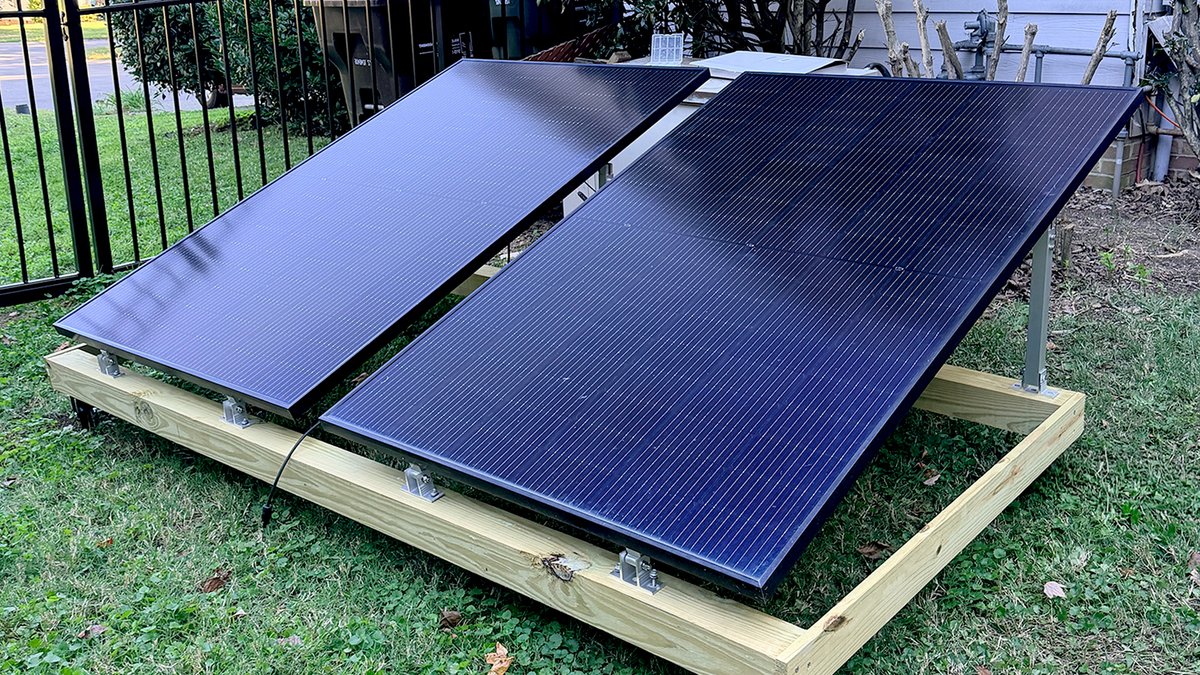
A homeowner who installed two 410-watt solar panels on their south-facing backyard observed that seasonal shading from nearby trees reduced their efficiency by nearly half. Even when positioned optimally, the panels failed to deliver consistent power, especially during the leaf-heavy summer months. To resolve this issue, they designed a movable mounting system that allowed for adjustments in both tilt and placement.
Design and Functionality of the Adjustable Mount
The solution consists of a rectangular frame measuring 4 feet by 9 feet, constructed from 2-by-4 lumber. Four heavy-duty caster wheels enable the entire assembly to be rolled across the yard with ease, while adjustable mounts on each panel permit tilting them upward or downward. This adaptability lets the homeowner reposition the panels to track the sun’s movement throughout the day or accommodate seasonal shifts in sunlight angles.
Installation required attaching the mounts to the frame and securing the hardware to the panels themselves. No permanent alterations were made to either the panels or the ground. Basic carpentry tools, a drill, screws, and a level, were all that were needed to ensure the frame remained stable when tilted.
Performance Improvements and Cost Savings
Within just 24 hours of deploying the movable mount, the homeowner measured a 100-watt-hour increase in solar energy production. By the following day, the gain had nearly doubled to 200 watt-hours. Before the adjustment, their two panels averaged 354 watt-hours per day, far below the system’s potential output of 1.97 to 3.3 kilowatt-hours daily under ideal conditions. The new setup now allows them to fine-tune positioning to maximize exposure, even when trees obstruct direct sunlight.
Prior to the upgrade, the homeowner’s six solar panels, including these two and four portable units, had saved approximately $200 annually on electricity costs. With the improved configuration, they anticipate that these two panels alone could double or triple their savings, potentially adding hundreds more to their yearly utility bill reductions. The EcoFlow Smart Home Panel 2 and SHP1 backup system further boosts efficiency by storing excess solar energy for use during peak-rate periods, ensuring no generated power goes to waste.
Addressing Legal and Practical Constraints
The homeowner’s state has delayed legislation that would allow plug-in solar systems, leaving DIY solutions like this mount as the most practical way to enhance efficiency. While not a permanent fix, it demands manual adjustments, the system has proven effective in the short term. They plan to replicate the design for additional panels as their solar array grows, though they recognize that each new setup will require calibration to achieve optimal performance.


