Tracker batteries survive extreme abuse without fire risks
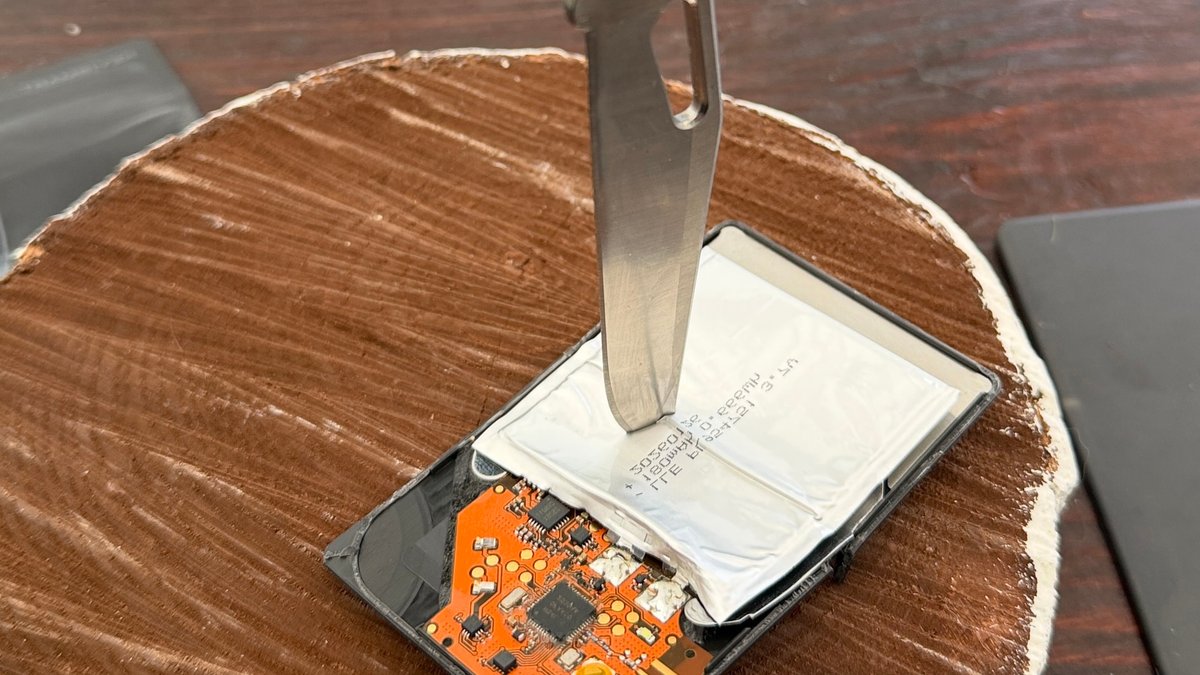
A credit-card-sized tracker battery will not explode, even under deliberate abuse. Testing by a writer involved subjecting two rechargeable finder cards to repeated bending, twisting, and piercing with a metal blade. The results showed the batteries warmed slightly but never reached dangerous temperatures.
The risk of lithium battery fires is well-documented in larger devices like phones or power banks, where high-capacity cells can release enough energy to ignite. Finder cards, however, use tiny batteries—typically between 110 and 400 milliamp-hours—well below the threshold where thermal runaway becomes a concern. Even a 400 mAh cell contains just 0.12 grams of lithium, roughly the size of a pea. Most of that lithium is chemically bound in oxides and salts, with only a trace amount existing as metallic lithium. This trace amount poses no fire risk unless the battery is physically crushed or exposed to extreme conditions.
The actual danger lies in the stored energy, not the lithium itself. When a battery is bent or pierced, internal components can short-circuit, potentially igniting the electrolyte. Yet in everyday use, dropped in wallets, sat on accidentally, or carried in pockets, finder cards rarely face such extreme stress. The writer’s tests confirmed this: after breaking apart multiple cards, none produced smoke, flames, or even significant heat beyond mild warmth.
Read Also: DIY solar mount boosts backyard panel output
Real-world incidents show minimal fire risks
Reports of issues remain rare. One reviewer noted a cheap, unbranded card swelling when left in a car, while another described a charging incident where a card melted a small hole in its casing. Neither case resulted in a fire. The only official recall linked to finder cards involved Anker’s charging magnets damaging magnetic stripe cards, not a battery safety failure.
Physics explains the lack of widespread incidents. A 3.7-volt battery of this size holds minimal energy compared to a smartphone or laptop cell. Even if damaged, the energy release is too small to sustain combustion. The writer’s most aggressive tests, piercing batteries multiple times, produced only slight warmth, not the kind of heat that would vent or catch fire.
Wallet design impacts card durability and safety
Not all finder cards perform equally. The writer’s old leather wallet had split several cheaper cards over time, leaving sharp plastic fragments. Rigid wallets, such as those from Ridge or Trayvax, offer better protection, reducing the risk of accidental damage.
Read Also: Nigeria struggles with slow 5G adoption despite 4G dominance
The writer’s testing confirmed that even under extreme conditions, the tiny batteries inside finder cards lack the energy to pose a serious fire risk. Two rechargeable cards, one from KeySmart, the other from Chipolo, were bent, twisted, and repeatedly pierced with a metal blade. The worst outcome was slight warmth, with no smoke, flames, or significant heat produced. These results align with real-world use, where cards endure daily stress from wallets, pockets, or accidental drops without failing structurally or electrically.
The lithium content in these batteries is minimal, ranging from 0.033 grams in an 110 mAh cell to 0.12 grams in a 400 mAh cell. Most of it is chemically bound in oxides and salts, reducing the risk further. The metallic lithium present is only a fraction of the total, and even that is unlikely to ignite unless the battery is crushed or exposed to extreme conditions. When internal components short-circuit due to physical damage, the electrolyte may ignite; but only under conditions far beyond typical use. The writer’s most aggressive tests, including multiple piercings, failed to produce anything beyond mild warmth, reinforcing that these batteries are designed to withstand far more than everyday wear.


