Seagate plans 50TB hard drive launch in 2027
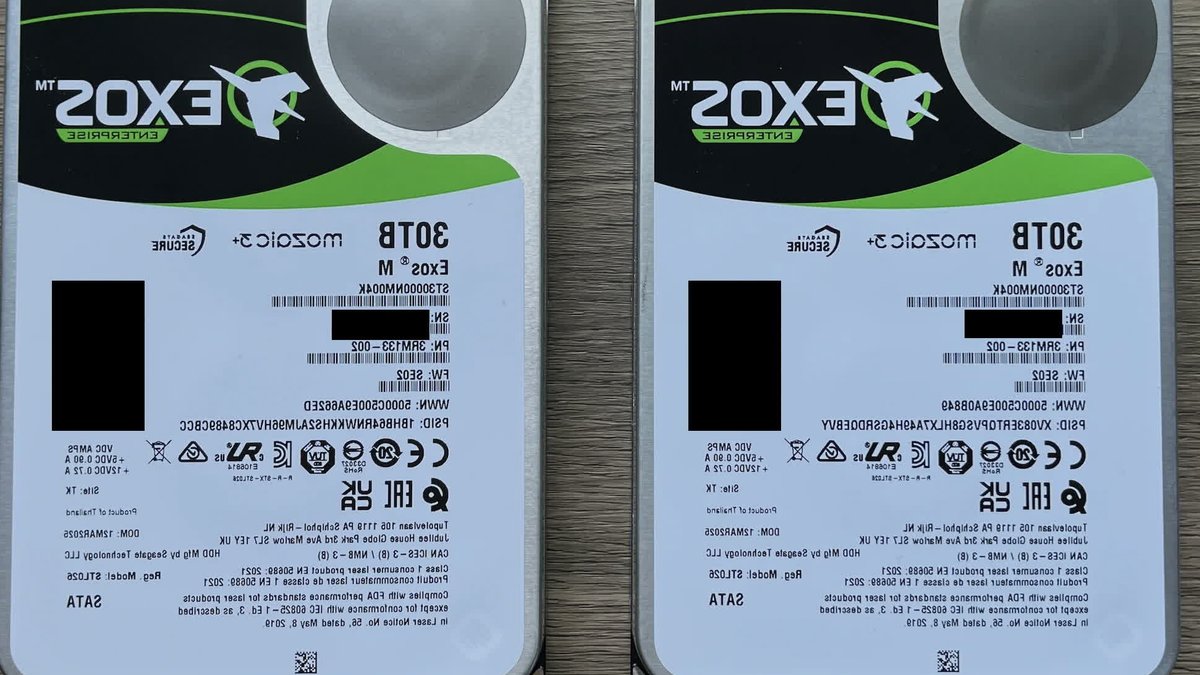
Seagate is aiming to launch hard drives with 50TB of capacity in late 2027, targeting a storage density of more than 5TB per platter. The company revealed these plans while reporting its financial results for the fourth quarter of fiscal year 2026. This technology update focuses on the manufacturer’s continued development of heat-assisted magnetic recording (HAMR) products. The drive is part of Seagate’s Mozaic 5+ platform, which will follow the current Mozaic 4+ line.
Seagate CFO Gianluca Romano stated that the company is on track to achieve a storage density of more than 5TB per platter. This metric suggests that a single hard drive could eventually contain ten platters, reaching over 50TB of storage. The Mozaic 4+ platform, which supports drives up to 44TB, is currently the standard for Seagate’s HAMR technology. By the end of 2026, these Mozaic 4+ models are expected to make up 50% of Seagate’s HAMR exabytes shipped to select customers.
Related: Hugging Face seeks 100 million compute hours
Seagate executives shared these details during the company’s latest earnings call with shareholders. The first Mozaic 5+ drives are expected to ship to customers for qualification later in 2027. After passing Seagate’s internal testing and validation procedures, the new drives will be delivered to OEM and data center customers for final approval. Once that process is complete, 50TB drives should become ready for broader adoption.
Sustained growth in areal density remains a key pillar of the company’s strategy going forward. Drives capable of fitting more terabytes onto each platter can help keep HDD costs “relatively flat” while allowing the manufacturer to scale its exabyte production capacity. This approach avoids requiring unsustainable levels of capital expenditure to improve manufacturing facilities. According to the report, demand from AI hyperscalers and cloud service providers drove positive results for the fourth quarter of fiscal year 2026.
Related: CVS Back-to-School Sale Offers Buy-One-Get-One Deals
Seagate closed the June quarter with $3.6 billion in revenue, up 17% sequentially and 48% year over year. Demand for “cold” storage devices is so strong that the majority of nearline exabyte output is already allocated well into 2028. The CEO noted that hyperscalers are using HDDs to manage the “long tail” of their AI workloads. Cold storage has become essential for providing AI models and agentic AI systems with “context.” The need to give AI agents a persistent data foundation across user interactions is driving storage procurement to unprecedented levels.
While the specific details of the Mozaic 5+ drives are proprietary, the hardware must still contend with the physical limitations of magnetic recording. As areal density increases, the thermal stability of the data becomes more difficult to maintain, meaning the manufacturing process for these high-capacity drives will likely require rigorous quality control measures to prevent data corruption during the qualification phase.

Hugging Face seeks 100 million compute hours


