Mac Studio M5 Ultra packs raw power
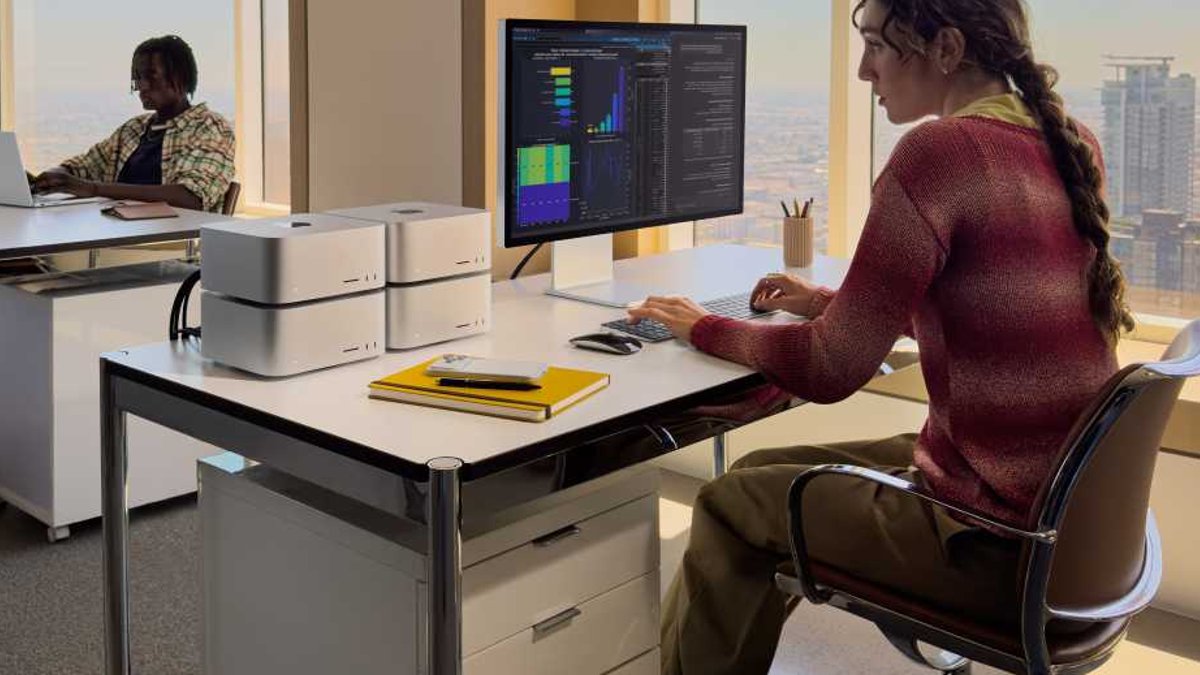
The Mac Studio is a powerful machine, and the M5 Ultra model is the most powerful version available. According to the report, this computer is designed for demanding tasks such as 3D and AI work, and it delivers exceptional performance. The M5 Ultra Mac Studio is equipped with a 36-core CPU and 80-core GPU, 256GB of memory, and 4TB of storage, making it a great choice for professionals who need a reliable and fast computer.
The design of the Mac Studio has not changed, with a 7.7-inch square and 3.7-inch high aluminum box that features two USB-C and one SDXC port on the front, and an array of ports at the rear. It also supports up to eight displays with up to 6K resolution at 60Hz, or four Studio Display XDR units, making it a great choice for professionals who need to work with multiple displays.
One of the key features of the M5 Ultra Mac Studio is its ability to handle massive multi-camera editing, racing through dozens of high-res angles at once to field the perfect shot. This makes it a great choice for professionals who work in live sports, concerts, and movie shoots. The computer is also capable of handling up to 33 streams of 8K ProRes video, making it a great choice for professionals who need to work with high-resolution video.
The M5 Ultra Mac Studio is powered by a quad-die chip built using Apple‘s UltraFusion process, which brings neural accelerators and makes the computer truly phenomenal for building, developing, training, or running AI models. The computer’s unified memory tech is also a key feature, as it scales to handle most anything you throw at it, efficiently. The advanced storage controller, superfast NAND, and really fast, next-gen SSDs also make the computer capable of handling massive data transfers.
Performance and Benchmarks
The M5 Ultra Mac Studio delivers exceptional performance, with Apple stating that the chip brings up to 4.3x faster AI performance, up to 1.8x faster GPU performance, and up to 1.3x faster CPU performance compared to the previous equivalent model. The computer is also almost ten times faster than the M1 Ultra for AI tasks. In terms of benchmarks, the computer scored highly in Geekbench 7 and Cinebench tests, with Apple explaining what these numbers mean when compared to the M1 Ultra Mac Studio.
The storage on the M5 Ultra Mac Studio is also extremely fast, with Apple deploying a new storage controller tech that works with the speediest NAND memory to deliver twice the read and write performance of the last generation. The Blackmagic’s Disk Speed test gave exceptional results, with 13,941MB/s write and 11,350MB/s read speeds. This makes the computer capable of handling multiple streams of uncompressed 8K RAW video, heavy compositing workloads, and AI development.
A writer who tested the Mac Studio found that it was capable of handling demanding tasks with ease, including running multiple streams of high-resolution video and handling massive data transfers. The writer also found that the computer was extremely fast and responsive, even when running headless as a domestic or business AI server.
Read Also: California signs bills tightening data center regulations
Connectivity and Workflow Integration
Front-panel connectivity includes two USB-C connectors and an SDXC slot, while the rear panel offers four Thunderbolt 5 ports, two USB-A ports, a 10 Gb Ethernet jack, an HDMI socket, and a headphone jack. The inclusion of Wi-Fi 7 and Bluetooth 6 ensures the latest wireless standards are supported, allowing seamless connection to high-speed networks and peripherals.
For live-video production, Apple added a generator-locking feature that operates over USB-C. This lets the on-screen image stay in perfect sync with professional cameras, delivering the most precise editing and playback experience available on a desktop machine.
Users who prefer remote operation can run the unit headless and access it via VNC. In practice, a secondary Mac can display the Studio’s desktop while the primary device handles typing and browsing, with no perceptible slowdown.
Considerations and Purchase Guidance
One limitation highlighted is the inability to upgrade memory or storage after purchase. Because the unified memory is integrated directly into the processor, any post-sale modifications would compromise the chip’s architecture and efficiency.
The box also arrives without a keyboard or mouse, a choice Apple justifies by assuming most professional users already own high-quality input devices. This omission feels unusual given the machine’s five-figure price tag.
Energy consumption remains modest despite the raw performance. Estimates suggest the system draws roughly five hundred watts at peak.

California signs bills tightening data center regulations


