Nigeria’s Data Usage Discrepancies Revealed in Personal Probe
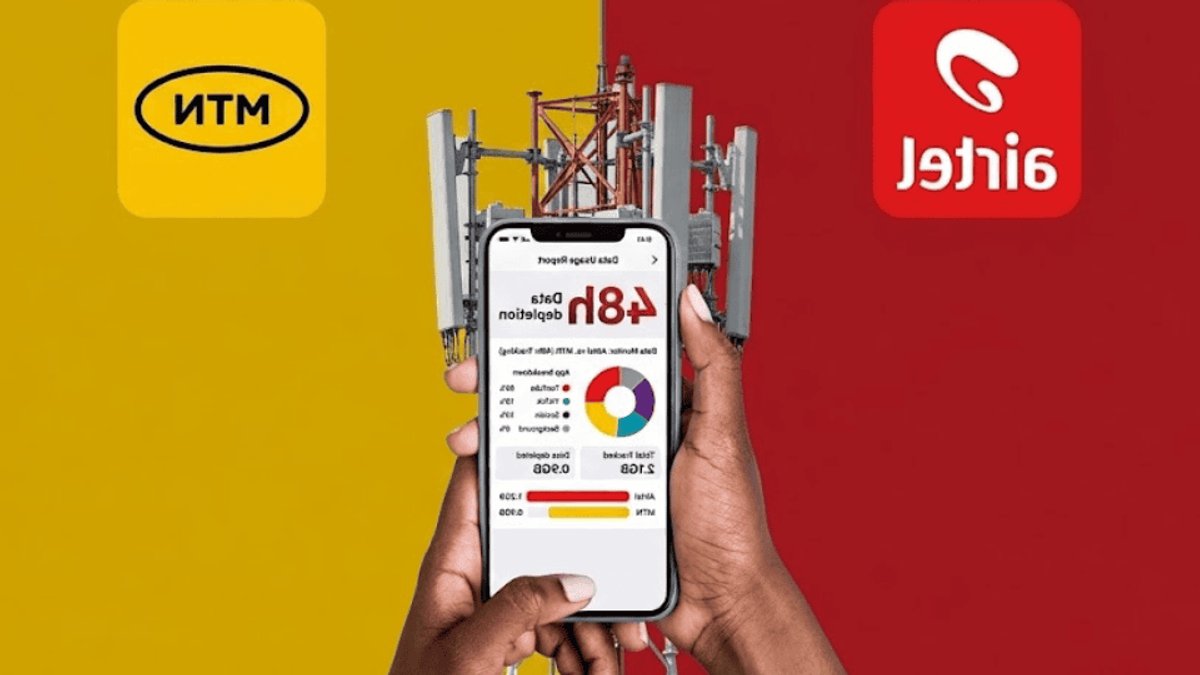
A personal investigation into data usage in Nigeria uncovered various hidden background processes, network overhead expenses, and an unseen consumption shortfall that subscribers incur.
A two-day experiment tracked data usage on two devices with different networks and operating systems. The results showed discrepancies between the phone’s reported usage and the network providers’ billing.
The YouTube Download Test
On the first day, three YouTube videos totaling 813 MB were downloaded. Airtel’s SMS report showed 868.65 MB, while MTN’s reported 852.79 MB. The phone’s internal tracker, however, showed 797 MB for Airtel and 835 MB for MTN.
This revealed a 9% gap for Airtel and a 2% gap for MTN, with the Android 14 MTN device providing more accurate reporting. The Airtel gap is where users often feel their data is disappearing.
The Google Play Store Download Test
On day two, three apps totaling 169.57 MB were downloaded. Both phones registered 175 MB, with an estimated 5.43 MB used by background services. Airtel’s report showed 185.44 MB, a 6% gap, while MTN’s 190.38 MB report had a 9% discrepancy.
These small percentage drains can lead to significant data loss over time, causing frustration for users. While there’s no evidence of direct data theft, the discrepancies originate from usage sessions.
The findings highlight an invisible network tax, where downloads incur additional costs due to server communication and retransmission of dropped data. This overhead tax accounts for an extra 5-10% of consumption, often unnoticed by users.
Additionally, the silent Android system drain, with background processes for push notifications, consumes 5-10 MB per download session. The billing transparency gap further erodes user trust, with discrepancies of up to 9% between device measurements and network billing.
To address this, network providers should offer detailed monthly consumption breakdowns. Users should also be aware of the 10% invisible tax and adopt data-saving measures, such as enabling data saver mode and restricting background activity.
Device and Network Setup for Transparency
To ensure accurate and fair calculations, the investigation utilized two devices with different specifications and networks. Device 1, a Tecno Spark Go 2023, ran Android 13 Go Edition with 3GB RAM and an Airtel 4G SIM on a weekly 4GB plan.
Device 2, a Tecno Pop 9, operated on Android 14 with 4GB RAM and an MTN 4G SIM on a weekly 3.5GB plan. This setup allowed for a comparative analysis of data usage reports from both devices and network providers.
The choice of devices and networks was intentional, considering the impact of device specifications, internet speed, and OS optimization on background data usage. By comparing phone app trackers with network provider reports, the investigation aimed to identify discrepancies and understand why users often feel their data disappears faster than expected.


